
SEMINARS AND WORKSHOPS
Faculty Development Programme on Generative AI to Agentic AI: Designing Intelligent, Context-Aware Educational Systems
Title of the Event: Generative AI to Agentic AI: Designing Intelligent, Context-Aware Educational Systems
Organized By: Department of Computer Science & Engineering and Skill Development Centre, NHCE
Date and Time: 12 August 2026 to 14 August 2026, 10:00 AM to 4:30 PM
Mode of Conduct: Offline
Target Audience: Faculty members from various departments
Resource Persons:
- Mr. Augustine Panjikaran Jose, Associate Partner, Business Consulting, Infosys
- Mr. Deepak Pinjani, Engineering Team Manager, Aptiv
- Mr. Partha Sarathi Datta, Senior Engineering Leader, Dell Technologies
- Mr. Harikrishnan Kanagasabesan, Principal Data Scientist, Sandisk Corporation
- Mr. Eswer Kishorekumar, Principal Data Scientist, Sandisk Corporation
- Mr. Praney Malhotra, Director, Business Consulting, Supply Chain Transformation, Infosys Consulting
- Mr. C. S. Vinayak, Technical Product Strategist / Senior AI Engineer, NxtGen Cloud Technologies (Avsar)
Introduction
The Department of Computer Science and Engineering, in association with the Skill Development Centre, New Horizon College of Engineering, Bengaluru, successfully organized a Three-Day Faculty Development Programme (FDP) titled“Generative AI to Agentic AI: Designing Intelligent, Context-Aware Educational Systems” from 12th to 14th August 2026. The programme was designed to provide faculty members with comprehensive exposure to the rapidly evolving landscape of Artificial Intelligence, spanning Generative AI, Large Language Models (LLMs), Prompt Engineering, Retrieval-Augmented Generation (RAG), Agentic AI, and AI-powered educational applications.
The FDP aimed to equip educators with practical knowledge and hands-on skills required to integrate AI technologies into teaching, learning, assessment, and research activities. The programme brought together distinguished industry experts and technology leaders who shared their expertise through interactive lectures, demonstrations, case studies, and practical workshops. Participants actively engaged in discussions on the future of intelligent educational systems, responsible AI, and innovative pedagogical practices.
Day 1: Foundations of AI for Education (12 August 2026)
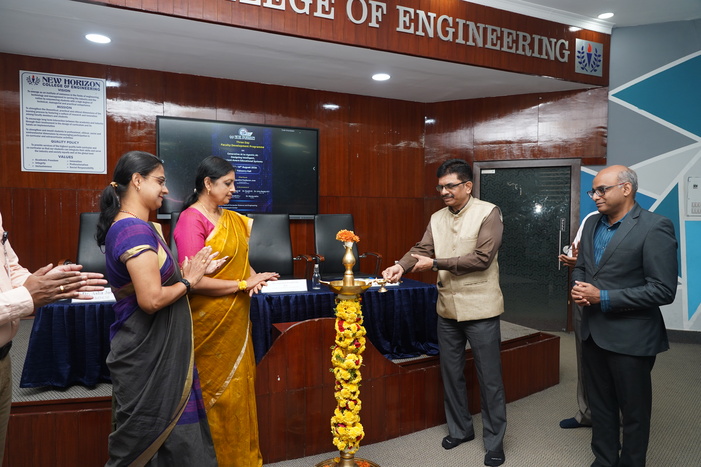
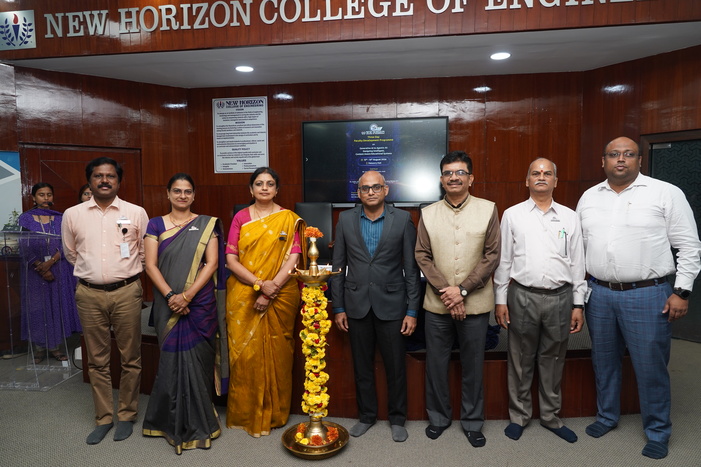
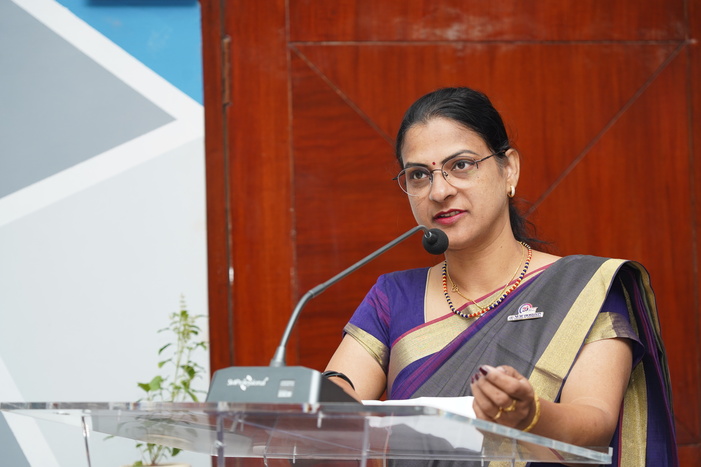
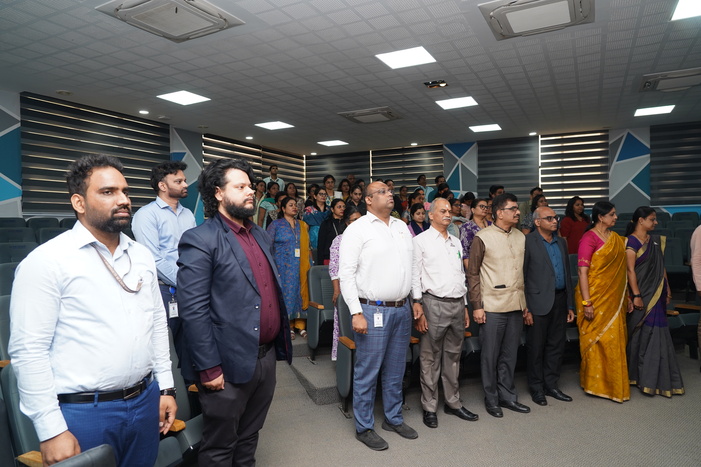
The programme commenced with the Inauguration Ceremony attended by the Principal, Dean, Heads of Departments, faculty members, and participants. The inaugural address highlighted the transformative role of Artificial Intelligence in higher education and emphasized the need for educators to continuously update their technological competencies.
The technical sessions began with Mr. Deepak Pinjani from Aptiv delivering a session on“Deep Learning and Neural Networks: Concepts for Educators.” The session introduced participants to fundamental AI concepts, neural network architectures, learning mechanisms, and educational use cases of deep learning. Participants gained insights into how AI models process data and support intelligent decision-making systems.
The second session focused on Natural Language Processing (NLP): Automated Evaluation and Chatbots, where participants explored language models, educational chatbots, automated assessment systems, and AI-assisted student support mechanisms. The session demonstrated how NLP technologies can enhance personalized learning experiences and administrative efficiency in educational institutions.
In the afternoon, Mr. Partha Sarathi Datta from Dell Technologies conducted a session on AI for Personalized Learning and Student Analytics. The discussion highlighted adaptive learning systems, predictive analytics, student performance monitoring, and data-driven educational interventions. The day concluded with a hands-on session on AI-Based Assignments and Feedback Systems, enabling participants to explore AI tools for content generation, assessment, and automated feedback mechanisms
Day 2: Transitioning from Generative AI to Agentic AI (13 August 2026)
The second day focused on advanced AI concepts and the evolution of Generative AI into Agentic AI systems. Mr. Harikrishnan Kanagasabesan and Mr. Eswer Kishorekumar, Principal Data Scientists from Sandisk Corporation, delivered an insightful session on“Demystifying Modern AI: From LLMs to RAG and Beyond.” The speakers explained Large Language Models, Retrieval-Augmented Generation (RAG), vector databases, embeddings, and practical educational applications of modern AI systems.
Subsequently, the speakers conducted an engaging session titled“From Idea to AI Application in 60 Minutes: Agentic AI and Rapid Prototyping.” Participants learned how intelligent agents can autonomously reason, plan, and execute tasks while interacting with external tools and data sources. The session demonstrated rapid AI application development techniques and highlighted emerging trends in agent-based systems.
The afternoon sessions provided deeper insights into building AI-powered applications through practical demonstrations and case studies. Participants explored AI workflow design, context engineering, prompt optimization, and development methodologies for creating educational AI assistants and intelligent learning environments.
Day 3: Educational Agents and Practical Implementation (14 August 2026)
The final day of the FDP was dedicated to practical implementation of Agentic AI systems in educational contexts. Mr. Praney Malhotra from Infosys Consulting delivered a session on“LLM Foundations to Hands-On Educational Agents.” The session covered foundational concepts of LLMs, educational applications, conversational AI systems, and strategies for designing intelligent learning assistants.
This was followed by a session on“Foundations of LLMs and Agentic AI,” where participants explored advanced agent architectures, multi-agent ecosystems, autonomous reasoning, and contextual decision-making mechanisms. Discussions emphasized the future role of intelligent agents in personalized education and institutional processes.
The final technical session was conducted by Mr. C. S. Vinayak, who introduced participants to“The Pivotal Role of Evaluation in Agentic AI.” Participants learned the importance of evaluation metrics, performance benchmarking, and validation strategies for AI systems. The FDP concluded with a Hands-On Workshop on Building Educational Agents with Claude Skills, where participants developed and tested educational agents for real-world academic scenarios. The programme concluded with a valedictory session and certificate distribution ceremony.
Outcomes of the FDP
The Faculty Development Programme successfully achieved its intended objectives by:
- Enhancing faculty knowledge in Generative AI, Agentic AI, Large Language Models, and Context Engineering.
- Providing hands-on experience in developing AI-powered educational applications and intelligent agents.
- Promoting awareness of responsible AI practices, ethical considerations, and data privacy issues in education.
- Encouraging the adoption of AI-assisted teaching, assessment, and personalized learning methodologies.
- Strengthening industry-academia collaboration through interactions with experts from Infosys, Dell Technologies, Aptiv, Sandisk Corporation, and NxtGen Cloud Technologies.
- Motivating faculty members to integrate advanced AI technologies into curriculum design, student projects, and research activities.
- Creating opportunities for collaborative learning, innovation, and research in emerging AI domains.
Conclusion
The three-day Faculty Development Programme on “Generative AI to Agentic AI: Designing Intelligent, Context-Aware Educational Systems” proved to be a highly enriching and forward-looking academic initiative. The programme successfully equipped faculty members with contemporary knowledge, practical skills, and industry perspectives on emerging AI technologies. The expert sessions, interactive discussions, and hands-on workshops provided participants with valuable insights into the design and deployment of intelligent educational systems.
The enthusiastic participation, positive feedback, and active engagement of the attendees reflected the overall success of the FDP. The programme significantly contributed to strengthening faculty competencies in Artificial Intelligence and fostered a culture of innovation, collaboration, and continuous professional development within the institution.